Compiled by John Brewer with input from his sister, Margaret (Doug Brewer’s children), April 2024.
Charles Brewer and his family moved to Woodgreen in 1897. They played a major role in village life over the next century. Several family members are depicted in the Village Hall murals, painted in 1933, and have leading parts in the BBC’s 1974 documentary, ’Village on the Wall’.
Charles Brewer was born in 1838 in Lower Daggons, Damerham into a family of established woodsmen. He became a market gardener and in 1874, at Redlynch, married Miss Bethiah Moody (born 1851, daughter of a bootmaker and shop-keeper). They had seven children, the youngest, George, was born in 1887.
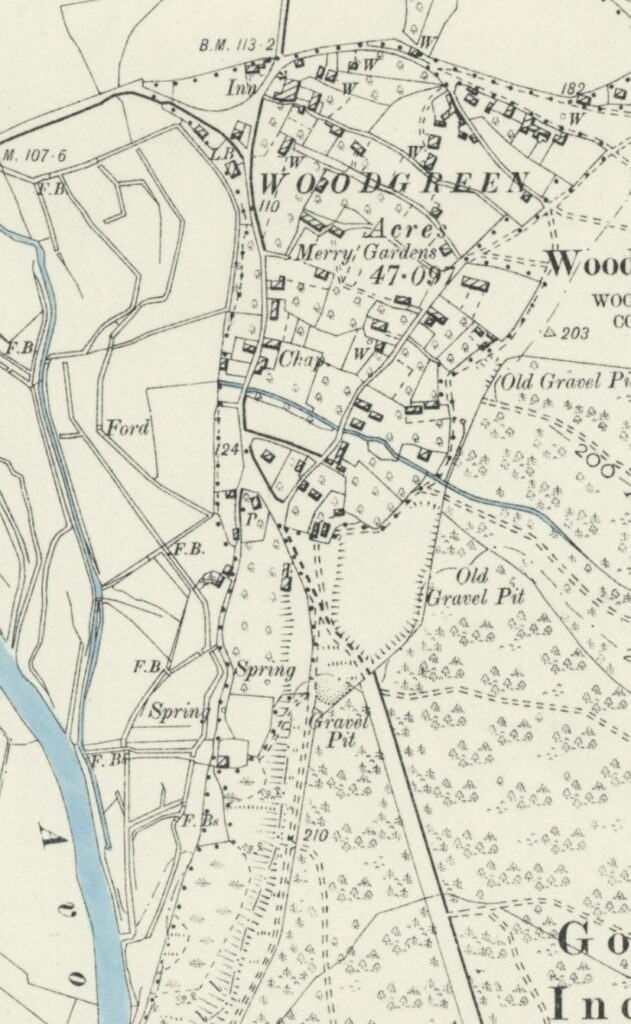
In 1897, the Brewers moved from Lover, Redlynch to Woodgreen after purchasing Avon Glen (in the High Street, now called Avon Lodge) – a detached house with an established market garden business. Its strip of cultivated land ran between the High Street and the adjoining meadows, from close to the Village Shop at the village green to a point below the ridge of Castle Hill.
In 1899, George left Breamore School, aged 12 years, and thereafter worked in the family business. Later he recalled how his mother would load her bicycle with their seasonal vegetables and fruit, then cycle to Salisbury’s Weekly Markets, ten miles away, to sell to its stallholders. The village was known for its soft fruits and orchards of apples, cherries, merries (sweet black cherries), and pears. In Spring, bands often led processions of people from Fordingbridge and local villages to see the blossoms and to picnic, sing, and dance in the Merry/Merrie Gardens – its orchards divided by ancient, gravelled paths that led to the village common. At harvest-time, workers came to earn cash by picking the fruit that had to be transported to local markets and once achieved, merriment followed – the locally produced mead, and scrumpy ciders, taking their toll on the unwary!
Following a Mission to the village in 1905, George joined the Methodist Movement. He learnt to play the organ, became a Lay Preacher, and was a staunch advocate of the Temperance Movement and its Band of Hope (formed in 1847). He appreciated that the inebriation he had seen in the village orchards and the hardship endured by families through drunkenness had to change, and aided by his deep and well-measured voice he delivered such sermons at Woodgreen’s Chapel and within the Salisbury Diocese.
In 1908, the Parish Council elected Charles Brewer as an Overseer – a voluntary role that required the person to check that parishioners were maintaining their hedges and ditches, and that roads were suitably gravelled. In the following years he and Bethiah worked harder in their business, even cultivating vacant plots rented from the Village Allotments.
On 25th April 1912 at Woodgreen Methodist Chapel, George married Mabel ‘Bessie’ Ings. Bessie, born in 1887, had been brought up by her Aunt Mary & Uncle Henry Froud (Frowd) in Woodgreen following the death of her mother.
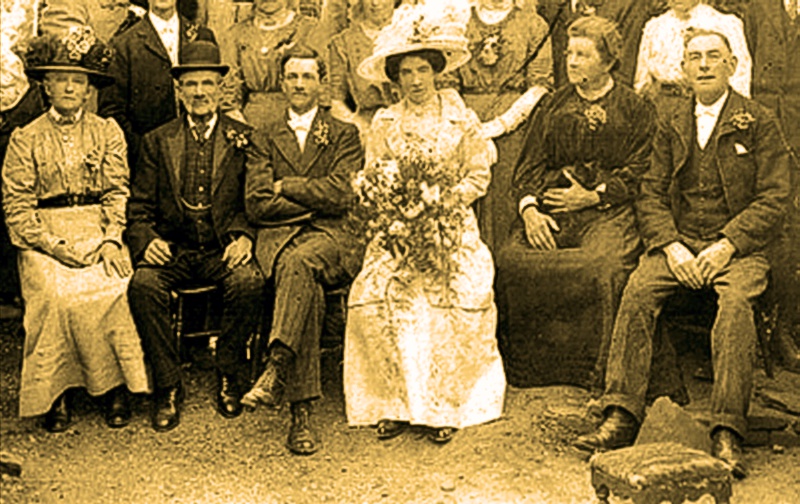
April 1912: Wedding group, Woodgreen Methodist Chapel
left to right : -Bethiah & Charles Brewer, George & Bessie Brewer, Mary & Henry Froud (Frowd)
Initially, the newly-weds lived with George’s parents, however with the birth of their first child in 1913, George purchased his first home in the village (Avon View).
During WW1, George was enlisted in the Army Veterinary Corps and served overseas. On his return the business grew, as did his family (of their family of six children, sadly, Ellen Mary died at birth, 1917). Bessie was always busy every summer she swam in the nearby River Avon, played for Woodgreen’s Ladies Cricket Team, and encouraged her children to be sporty.
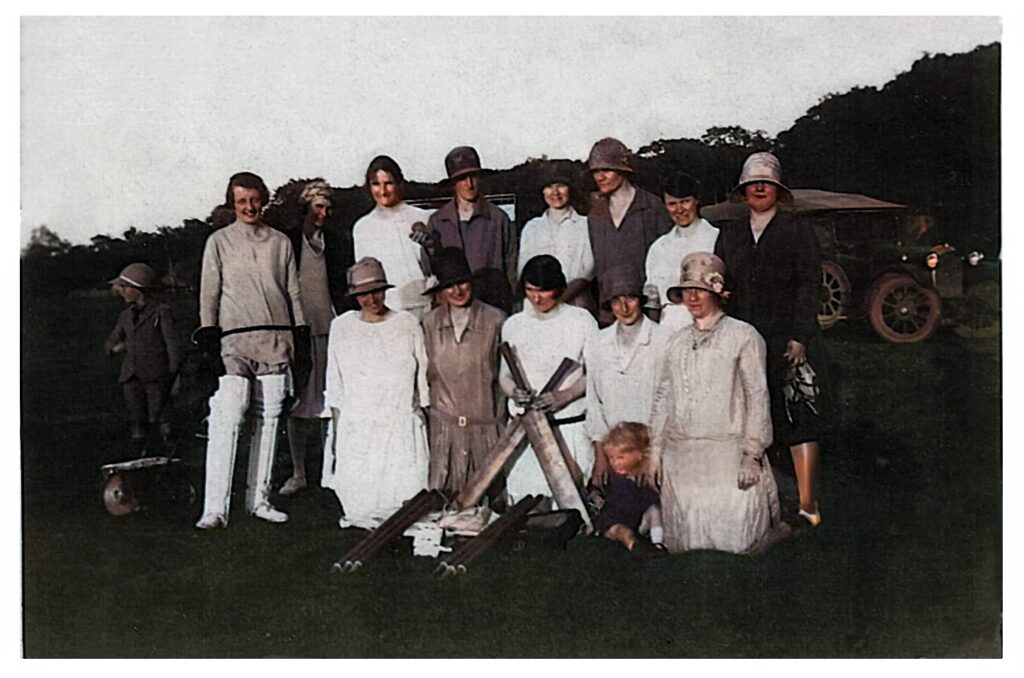
Back row (l to r): Elsie Morris, Winnie Brown, Alice Hooper, Jane Snelgrove, Rosie Harrington, Mrs Street, Elsie Harrington, Dorothy Parker. Front row (l to r): Florrie Parker, Sarah Cook, Dorothy Thorn, Win Chalk, Bessie Brewer.
After the death of his father, Charles, in 1919 and with Bethiah ageing, George now ran the business. In addition to their produce, he increased the quantity offered to outlets by using his newly acquired motor car to collect items from other growers in the area, subsequently extending his activities to provide a Carrier Service.
In 1922, George was elected a Parish Councillor, and during subsequent years was often elected ‘off’ and ‘on’. His ethos centred around his knowledge of Forest Rights, and his staunch Methodist and Temperance beliefs. Whilst in office he pursued the need for a replacement Reading Room; also, the necessity for a village mains water supply to replace individual wells with that water likely contaminated by the households who over the years had emptied their earth closets in pits dug in their gardens. He encouraged villagers to build individual cesspits and campaigned for a village rubbish dump – eventually securing an old gravel pit near Castle Hill for such purpose.
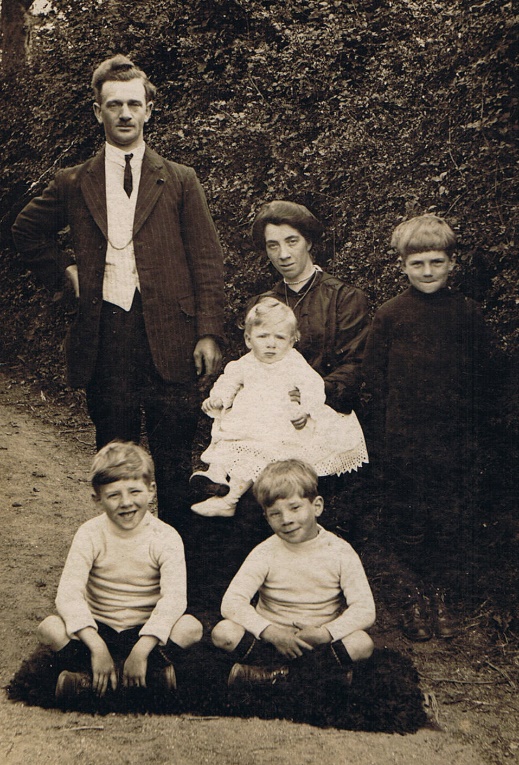
In 1926, his twin son Charles (“Charlie”) was killed in a tragic road accident. The eleven-year-old lad was cycling home for lunch from Breamore School when he was knocked off his bicycle and killed in an accident involving the family doctor’s chauffeur-driven car. The tragedy was witnessed by Doug, his twin brother. The vehicle was travelling from Fordingbridge to the Doctor’s ‘Village Surgery’, then held on alternate weeks in the front room of one of three houses that included the Brewers, and the Frouds (who had brought up Bessie) where the surgery was to be held that day.
Charlie was interred at Breamore Churchyard, about a mile and a half away, and subsequently George championed the need for Woodgreen to have its own Village Cemetery. In 1932, he was asked to organise its ‘Opening and Consecration Service’ – the consecrated land on the left of the entry gate dedicated to the Church of England parishioners; the Methodists and other denominations interred on the right. With the support of villagers, George also achieved an improvement to the junction of the road from Breamore to Woodgreen where it climbed over the Railway Arch, including the demolition of a large horse chestnut tree.
The early 1930’s witnessed other changes in the village – in 1929 the Woodgreen’s Women’s Institute had corresponded with Sir Hamilton Hulse, of Breamore House, as to the possibility of a long lease being granted on part of his land to allow them to build a Village Hall. Although the Parish Council decided not to become involved, they did agree that they would consider taking it over once completed. Construction took place during 1931, the cost raised by Mr. Vaughan Nash, an influential resident who, at one time, had been the Private Secretary to Lord Asquith, Liberal Prime Minister. The Hall’s interior was decorated the following year with murals depicting the villagers going about their daily life by two young artists, Robert Baker, (1909-92) & Edward Payne (1906-91). Depicted in the various scenes are George Brewer, his children, and their cousins and friends.
In addition to taking his produce to the Salisbury markets, George also supplied some of the larger shops. On his return he would collect parcels for people in Woodgreen and as he became busier, he purchased a 14-seater bus – the first in the area. Besides transporting villagers and their goods to and from Salisbury for a fare, he used it to take Methodists to local chapels where he was preaching.
Over the years, George and family had often moved within the village. He would employ builders to construct a bungalow on a portion of land no longer cultivated through seasonal labour proving difficult to hire, and his preaching commitments and Parish Council affairs taking more time. With WW2 looming, Bessie became increasingly worried that her sons would take part and get killed, and in 1938 was encouraged to spend a few days away with friends near London. However, after swimming in their local river on a hot afternoon, she became unwell and had to return home earlier than intended. Her health worsened, and it was confirmed that she had contracted polio. Within weeks she died – her grave one of the first in Woodgreen’s Cemetery reserved for Methodists.
During WW2, George served in the Home Guard. In 1943, he married Miss Lilian Grace Webb, at the Methodist Chapel, Salisbury. Thereafter they lived in various bungalows he continued to build in Woodgreen. The aftermath of two World Wars and a changed society had brought dramatic change to Woodgreen and its village ways and hastened the end of George’s market gardening and business interests. Despite this, his interest in village affairs continued as did his ministry at Woodgreen’s Methodist Chapel and in its Salisbury Diocese. Following a short illness, George died in 1966 aged 78 and his grave, along with those graves of his family, are found on the right-hand side at Woodgreen’s Cemetery.
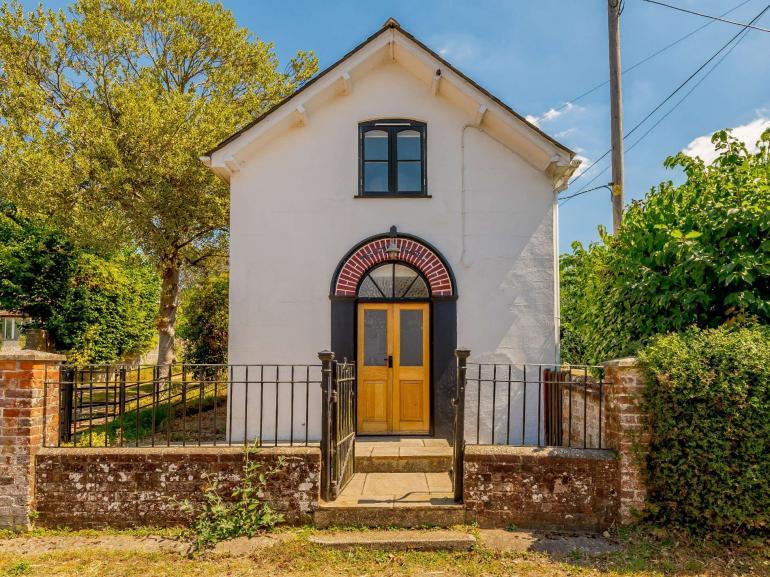
With a declining and aged congregation, it held a final Service on 7 September 2014.
It is now a holiday cottage.
George’s Children and Woodgreen’s Village Hall Murals
Like their father, all attended the Church of England School at Breamore and except for Charlie, are depicted on the Village Hall Murals. The family continued their strong Woodgreen connection and in 1974 appeared with other villagers in the BBC’s Yesterday’s Witness programme, The Village on the Wall, and subsequently in various related newspaper and magazine articles.
Alfred, 1913-1979. He is shown dancing in the Morris Dancing Team that took part in the National Competition finals at the Royal Albert Hall in 1930.He became a printer; married Miss Greeba Clark at the Methodist Chapel, Fordingbridge in 1940, and was enlisted in the RAF in WW2. They lived in Fordingbridge where he served on many of its committees and was a long-serving Secretary of its Royal British Legion Branch. Fortnightly, he and Greeba would attend services at Woodgreen Methodist Chapel.
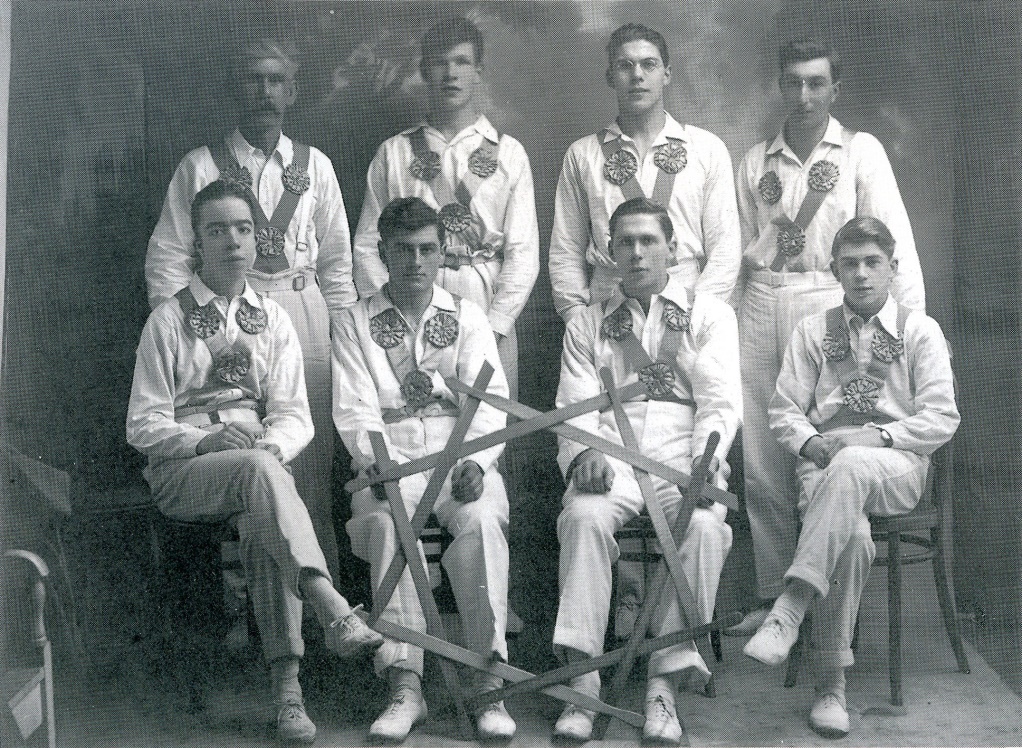
Alfred Brewer, (seated, front right). Enthusiasm for Morris Dancing had increased throughout the 1920s; lessons were held in towns and villages around the New Forest and groups would combine to give larger exhibitions.
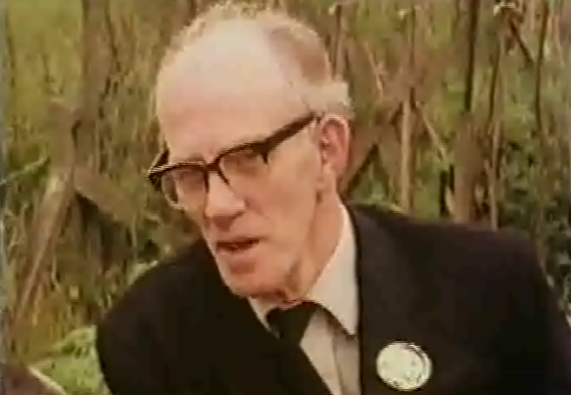
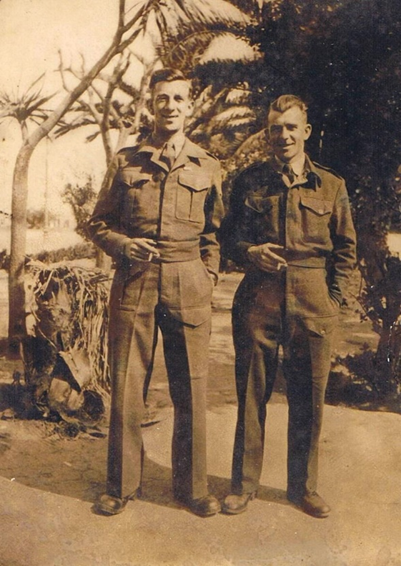
Douglas, ‘Doug’, 1914-2012. The elder twin enjoyed sports and was known for his fearless tree climbing. In a village hall mural, he is shown peeping out of the top of a fruit tree whilst George climbs the right-hand ladder. In 1934, Doug achieved his ambition when he enlisted for the 1st Hampshire Regiment and became a regular soldier. In 1936, he was stationed in India. During 1938, travelling home for their first leave, their troopship was diverted to Egypt after unrest in Palestine. Renowned for its battle ethos and with the declaration of WW2 in September 1939, the Regiment endured continuous action throughout North Africa, the Mediterranean area and into Europe. A marksman, first class signaller and despatch rider, Doug survived albeit at least seven of his motorbikes did not. When his battalion eventually arrived home in November 1943 for rest and retraining (for D Day), family letters dated 1938 onwards caught up with him and he learnt of his mother’s death and his father’s remarriage.
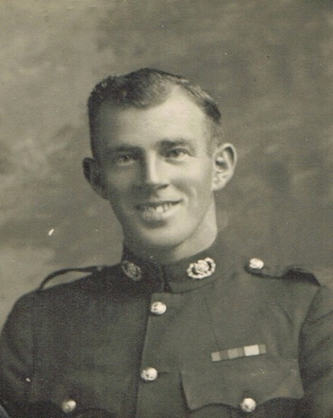
5497333 1st Hampshire Regiment
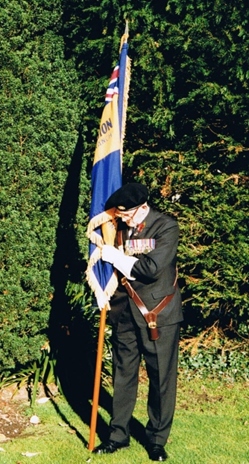
Doug married Miss Ellen ‘Nell’ Mist from Godshill in 1945 at Woodgreen Methodist Chapel. On leaving the army, he became a bus conductor for the Wilts & Dorset Motor Services & lived in Woodgreen. He was a keen competitor in the Horse & Groom’s Darts Team; won many prizes at the Village Flower Show for soft fruit and roses (nicknamed ‘King of the Roses’), and well into his 80’s, without fear, would climb and prune trees to help fellow villagers. He was a Treasurer for the Royal British Legion’s Breamore & Woodgreen Branch, later, its Standard Bearer in which role, immaculately turned out and wearing his nine campaign medals, he took part in the Annual Service of Remembrance at the Royal Albert Hall, London, in 1993. In retirement, he became a Village Hall caretaker and took immense pride in telling visitors all about his villagers on the wall, and the many pranks he had taken part in.
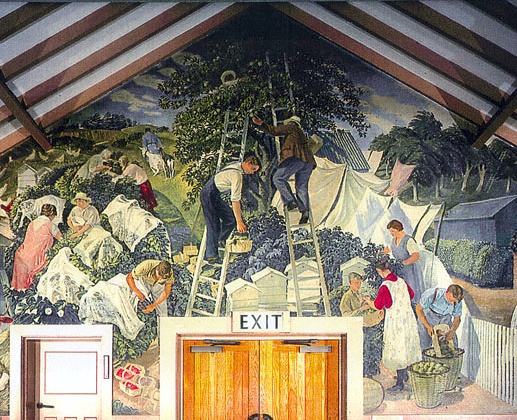
George Brewer on right-hand ladder; Douglas Brewer’s head is peeping out at top of tree.
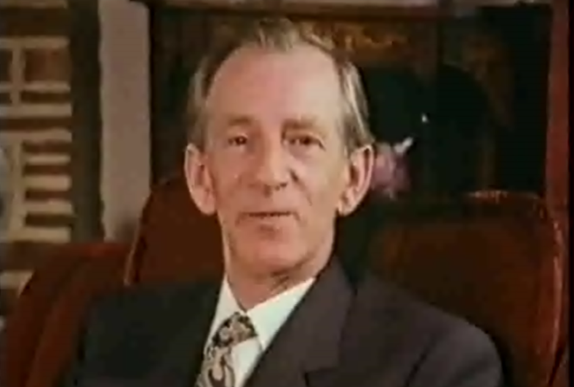
Maurice, 1919-1985. He is depicted in the Methodist Sunday School mural, as is his sister and their cousins, the Crook family. On leaving school, he had various jobs from being a baker, to a delivery driver. In 1941 at St. Mary’s Church, Fordingbridge, he married Miss Joan White from Burgate – and the same year was enlisted into the Army. After working in the Channel Islands, they returned to Woodgreen and ran the General Stores by the village green. He served on the Parish Council; became a Methodist Lay Preacher and often led Services at Woodgreen Methodist Chapel. He was actively involved in fund-raising for the Village Hall; progressed the printing of postcards depicting the hall murals for visitors to purchase and was instrumental in commissioning the colourful mosaic above the Hall’s entrance.
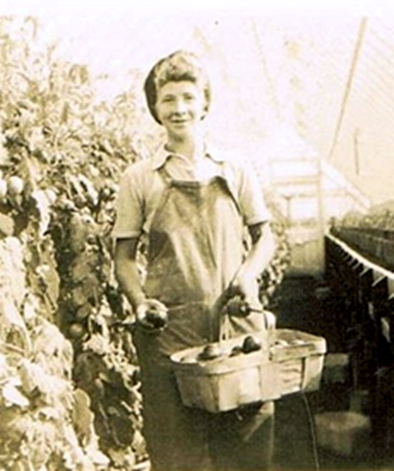
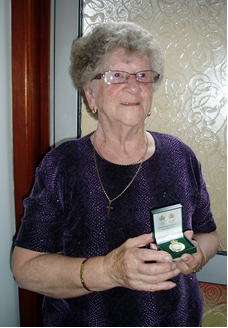
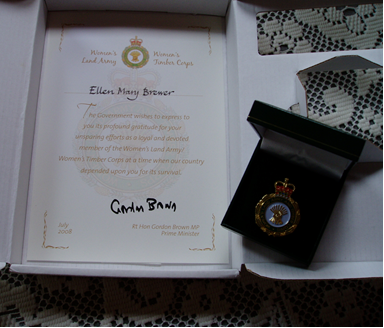
Ellen ‘Nellie’, 1925-2023. Is depicted with her cousin, Irene Crook, wearing their best hats in the Village Flower Show mural, and also is in the Sunday School scene. A demure schoolgirl when her mother died, she fondly remembered her father preparing Sunday lunch – a large white apron covered his best suit, he dressed to take Sunday School at Woodgreen Methodist Chapel, where he was the Sunday School Superintendent. Nellie became a Land Army Girl at Hale Nurseries (the extensive greenhouses now demolished and redeveloped for housing). In 1946, Nellie and Colin ‘Johnnie’ Simpson married at Woodgreen Methodist Chapel and afterwards lived in the village.
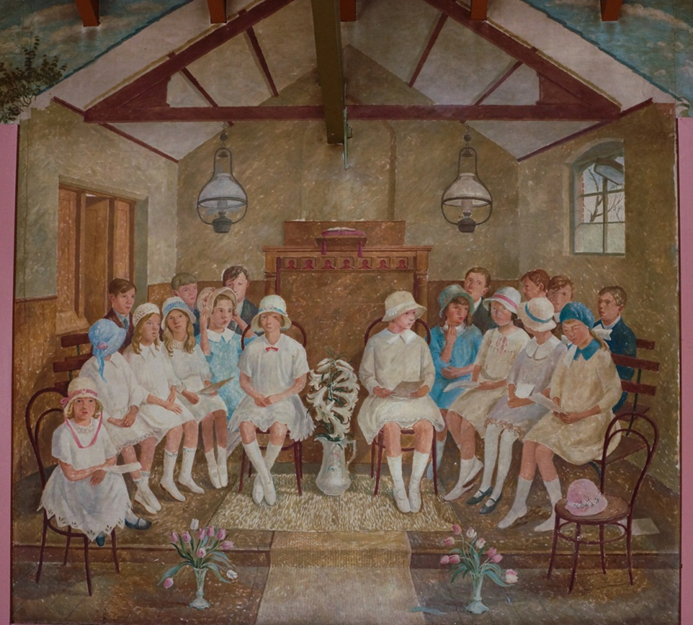
Sunday School in Methodist Chapel, 1932-3
(Left to right): Joan Ings, Hilda Harrington, Maurice Brewer, Dorothy Hobbs, Nellie Brewer, Ronald Crook, Irene Pynter, Leslie Parker, Irene Crook, Ruby Gilbert, Lilian Elkins, James Hooper, Mary Elkins, Cecil Parker, Kathleen Parker, Kenneth Parker, Kathleen Crook, Laurence Newman.
The 1974 BBC documentary, “The Village on the Wall”, with subtitles provided by John Brewer, can be viewed here: THE VILLAGE ON THE WALL