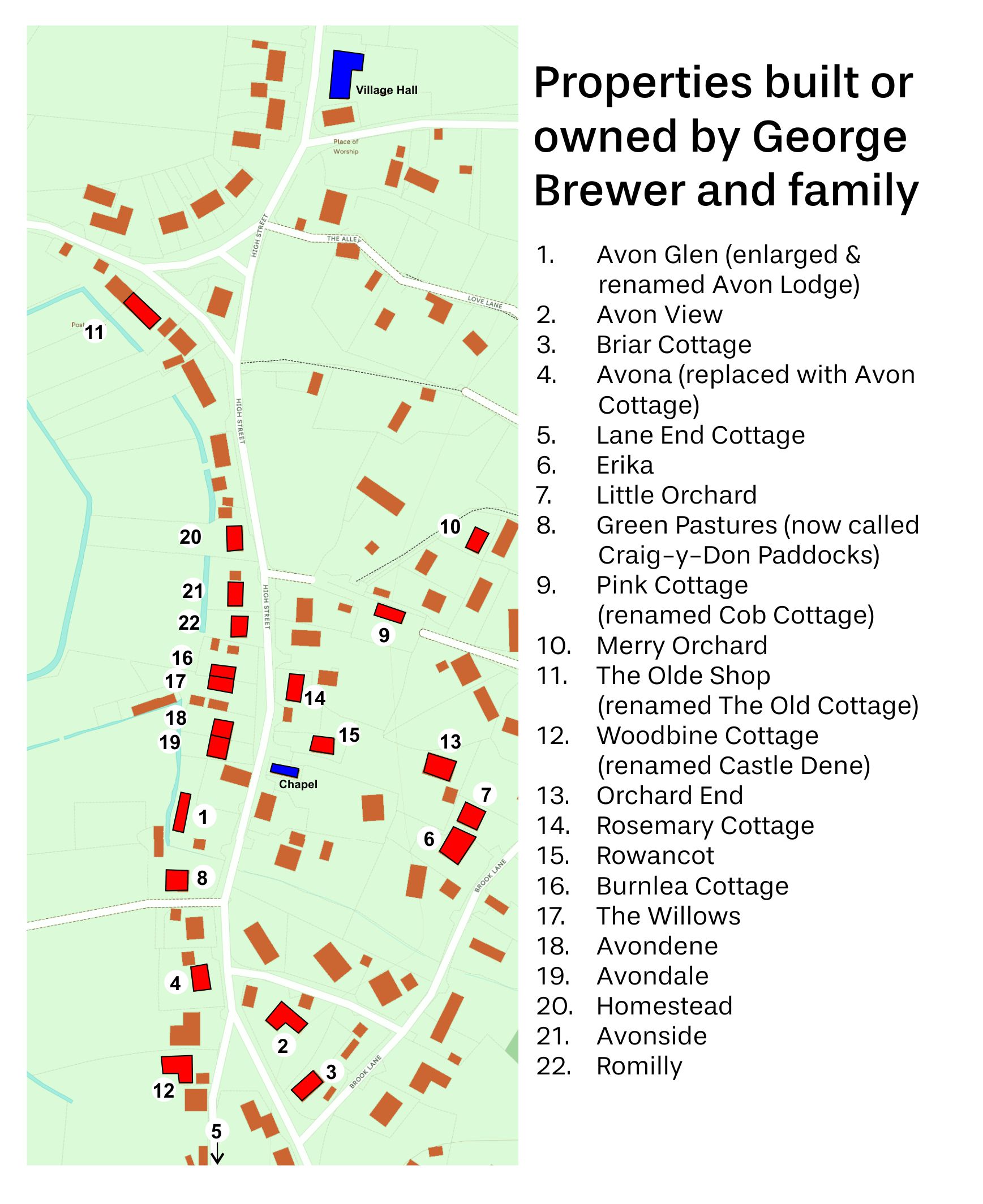
This is an account of the Brewer family, their market gardening business, and how the need to diversify led to the building of many of the properties on Woodgreen’s High Street.
The Brewer’s market garden business
At the turn of the 1900s, the western side of the High Street was a narrow strip of agricultural land interspersed with orchards but with few properties. Two of these were Avon Glen (now renamed Avon Lodge) and Sunnyside Cottage, an older thatched property opposite the Methodist Chapel.
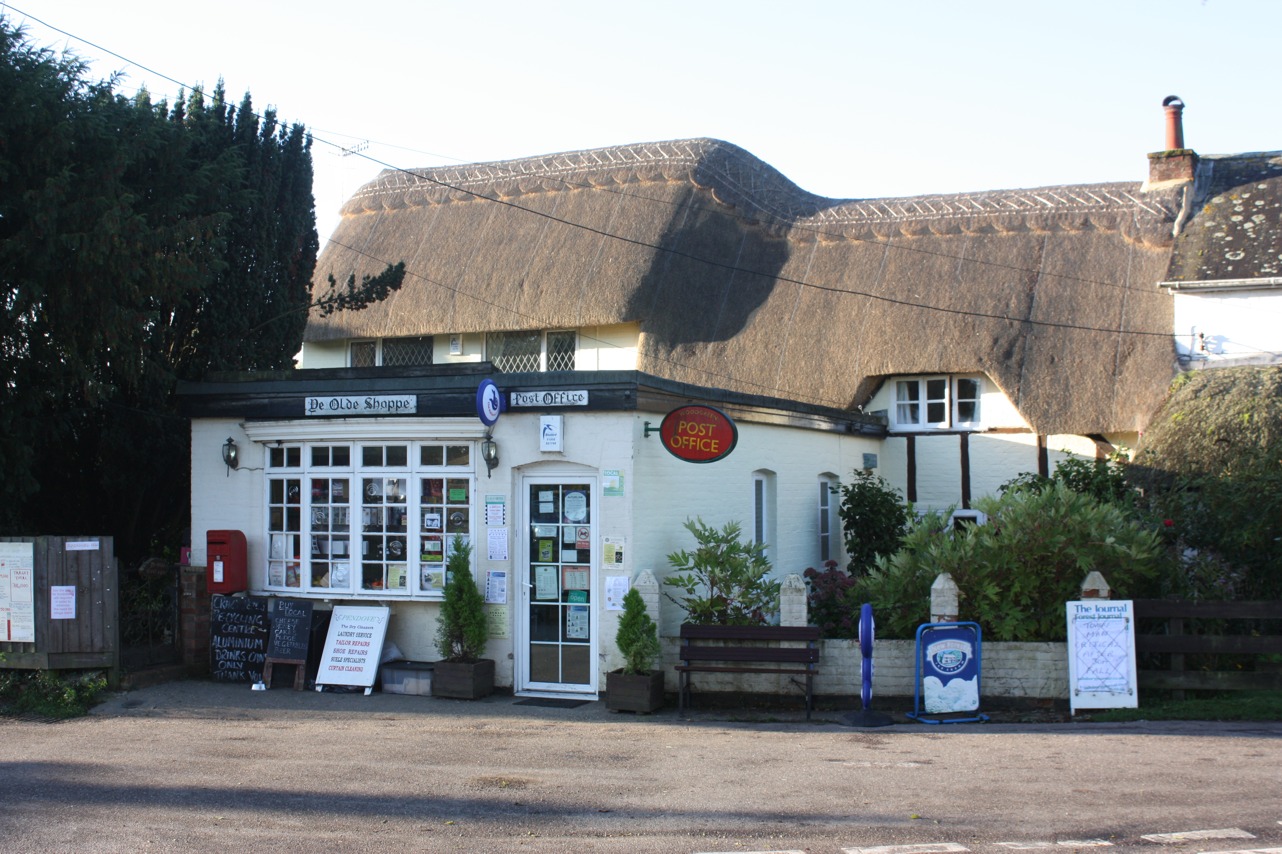
In 1897, Charles and Bethiah Brewer bought Avon Glen and worked the ‘ribbon’ of market gardening land that stretched almost undivided from ‘The Olde Shop’, at The Green, along the meadow side of the High Street to a point under the heights of Castle Hill.
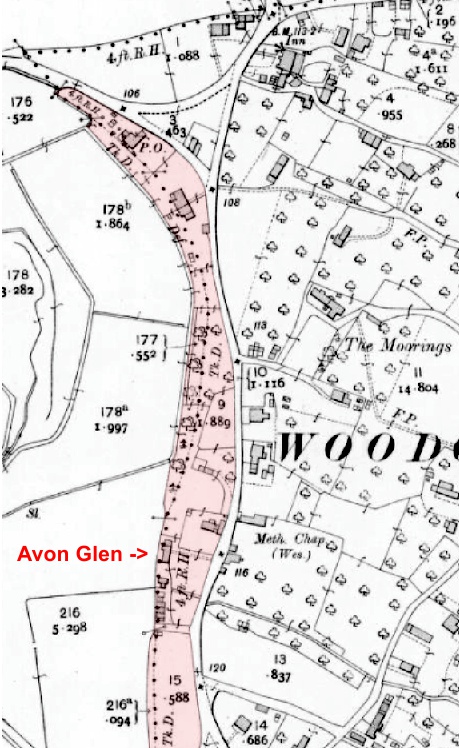
The loss of agricultural labour through WW1 and the changed agricultural methods that followed resulted in inevitable change for the Brewer’s market gardening business. Their youngest son George had remained at home helping his ageing parents and eventually inherited the house and land. He married Miss Mabel ‘Bessie’ Ings in 1912. Working together, the business prospered. The Brewers were enthusiastic, hardworking and enjoyed cultivating the land; they dealt in vegetables and soft fruits grown by themselves and others in the area; employed part-time labour and later were to enlist the help of their three teenage sons.
George organised a carrier service in conjunction with his trips to deliver produce to the local markets, first using his motor car, and later a 14-seater charabanc bus – the latter also proved helpful in transporting fellow Methodists to his various sermons in the Salisbury area. He parked the vehicles at his ‘yard’ next to Avon Glen where, over the years, various wooden buildings required for the market gardening activities had been erected.
Regrettably, this prosperity drastically changed with Mabel’s death in 1938 and then the outbreak of WWII in 1939. George’s sons, together with able-bodied men and women, were called up for War Service and the seasonal workforce effectively disappeared. He used a few of his smaller sheds for the storage of second-hand furniture and household items that he ‘dabbled in’ for sale – as WWII raged, villagers often said, “a useful income with wartime shortages!”
After the war, George’s Methodist Preaching and Woodgreen’s Parish affairs required more of his time and the market gardening business continued to decline. It was accepted that life had changed for everyone. Over the coming years, George gradually divided off plots of his land to construct properties for his own occupation or for sale, or for occupation by family members.
Property owned and occupied by George Brewer
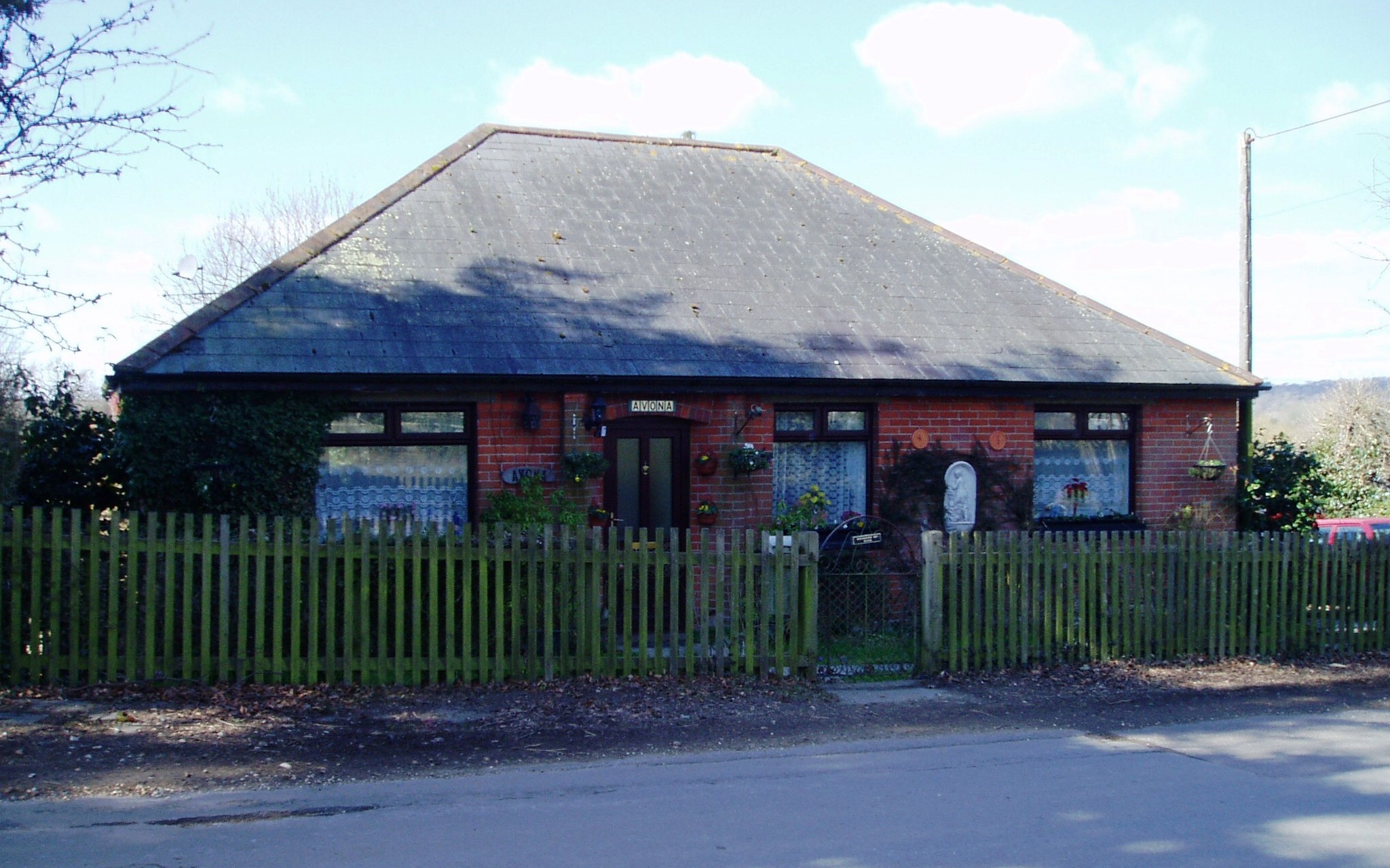
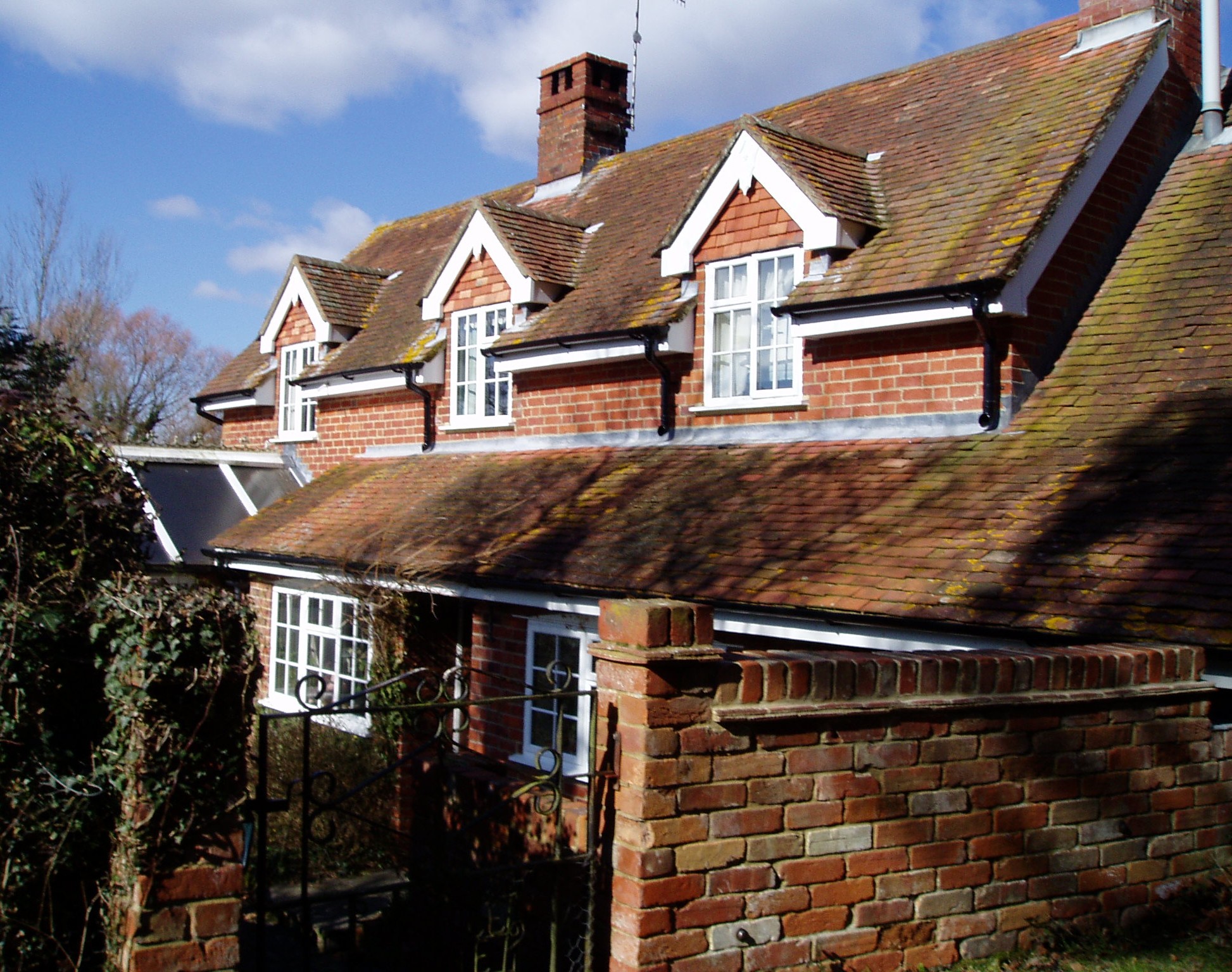
George and Bessie’s first ‘family home’ was Avon View (2), a detached house in the High Street. With the start of WW1 in 1914, and his conscription, George moved his wife and three sons to Briar Cottage (3), a ‘manageable’ red-bricked bungalow in the High Street, built in 1916. George served in the Veterinary Corps from May 1917 until he was demobbed in March 1919. Now requiring a larger home, they moved to Avona (4), a red-bricked bungalow. It has since been demolished and replaced with Avon Cottage.
After the tragic death of their twin-son, ‘Charlie’, in 1926 and with his widowed mother ageing, George & family returned to live with Bethiah at Avon Glen (1). Bethiah died in 1930. Then in 1938, Bessie died after contracting polio.
George’s distant cousin, Miss Nellie Jefferis sold her tobacconist shop in Fordingbridge and moved in with George to care for him and his family. Village rumours as to their marriage proved unfounded when, in December 1943, George (now aged 56) married Miss Lillian ‘Grace’ Webb (aged 39), at the Methodist Church in Salisbury. Grace and her maiden sister, Ellen, had run a tearoom at Rosemary Cottage in the High Street. Despite the village gossip as to “a claim for breach of promise”, George and ‘Nell Jeff’ agreed an amicable arrangement – she moved into the former wooden tearoom that he owned in front of his ‘yard’ that adjoined Avon Glen. Thereafter, the bungalow became her permanent home.
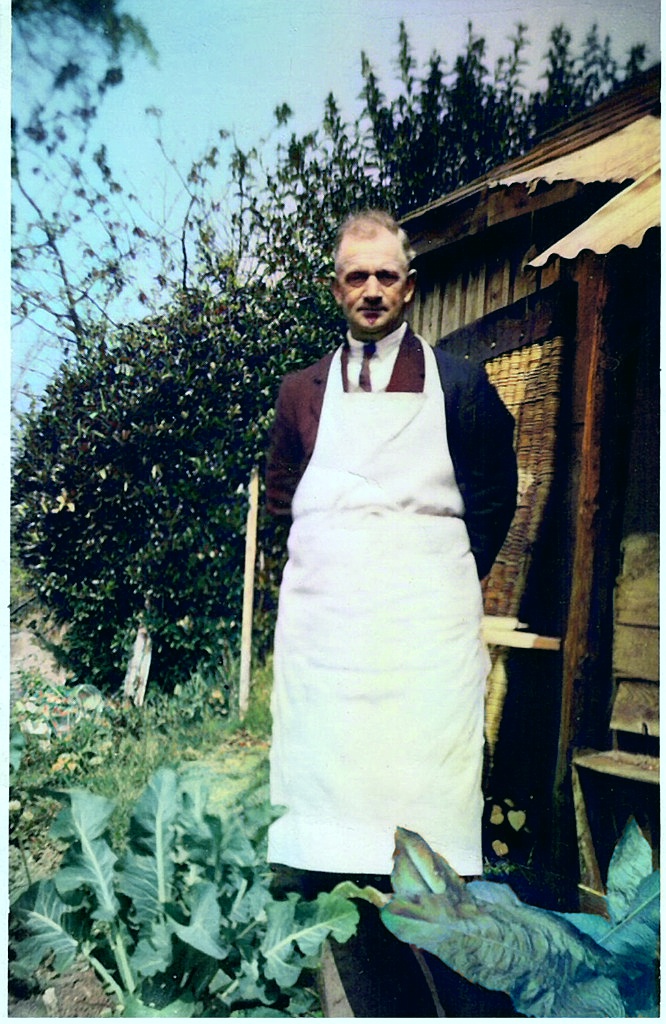
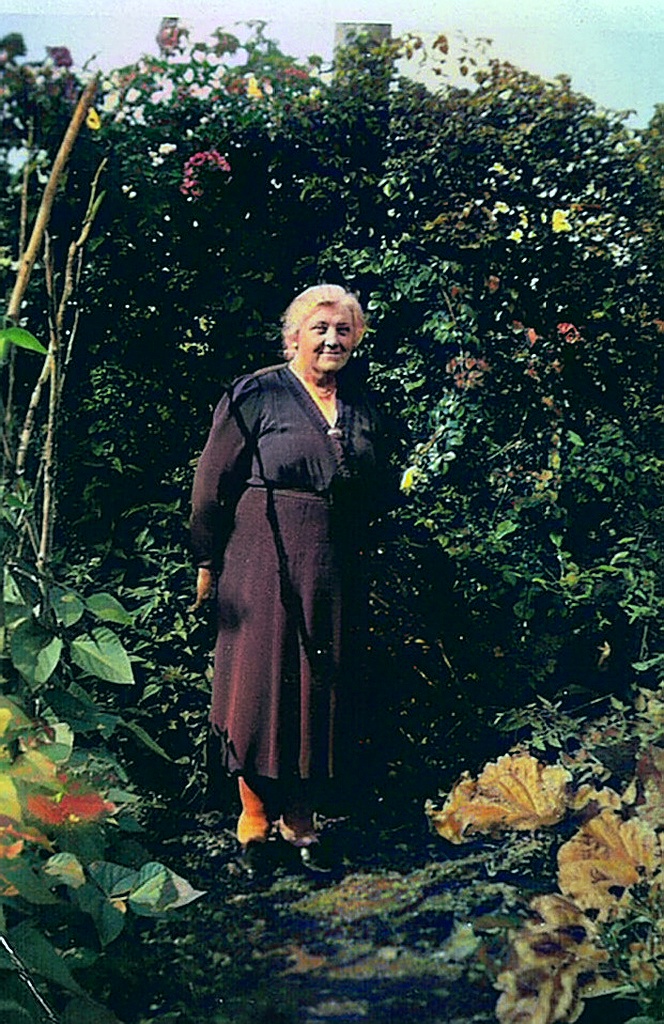
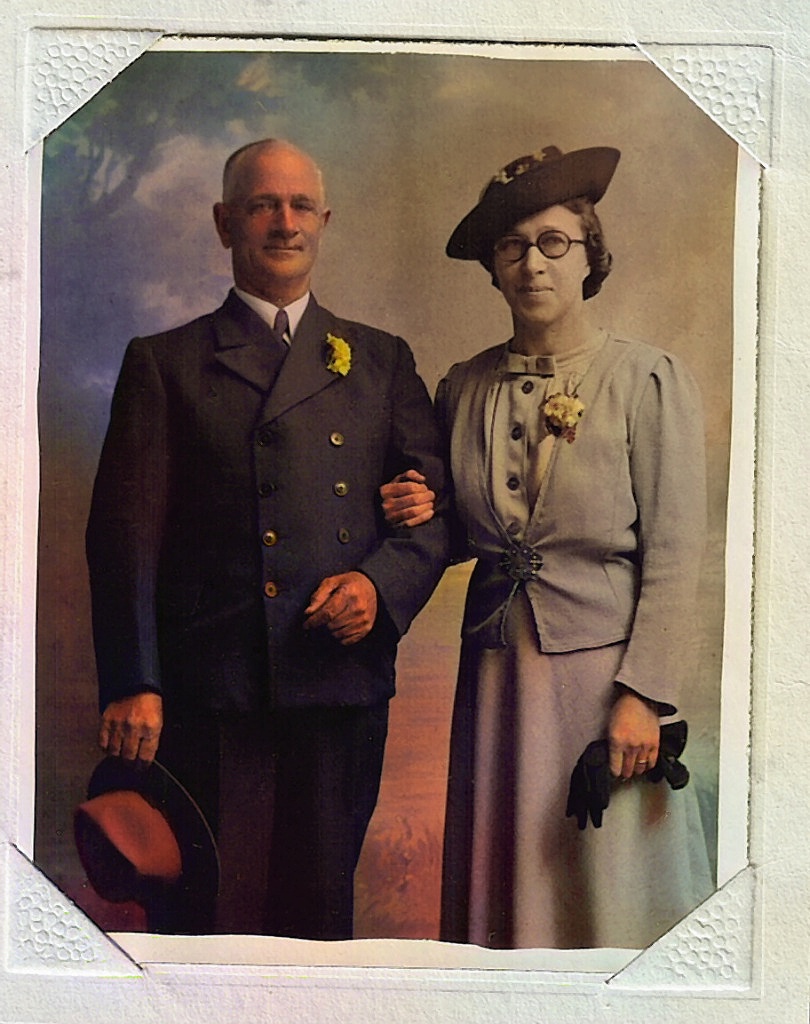
With WWII ending, George and Grace needed a fresh start. He fenced off Avon Glen (1) with an adequate garden and sold it. The couple moved to Lane End Cottage (5), a thatched house at the end of the gravelled track off the High Street, surrounded by the tall trees of Castle Hill that towered above. The atmosphere was found to be “too damp” for Grace’s health, so they moved to Erika (6), a brick & pebble-dashed bungalow, on Brook Lane. Years later, George divided its garden and, on that plot, built a modern bungalow for their next home, Little Orchard (7), a red-brick bungalow.
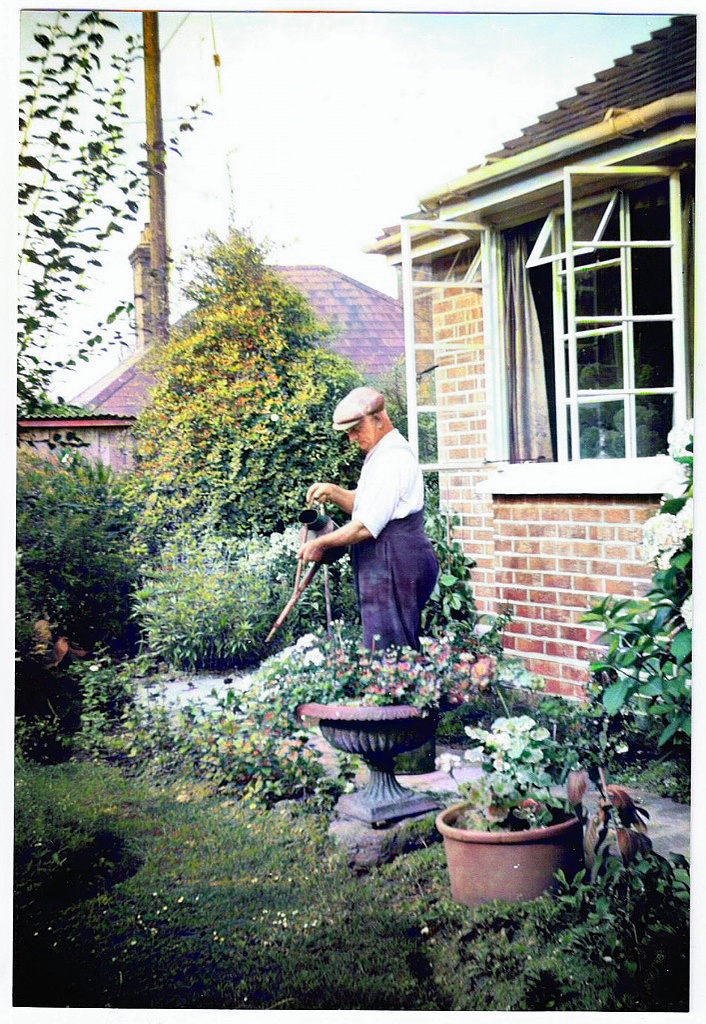
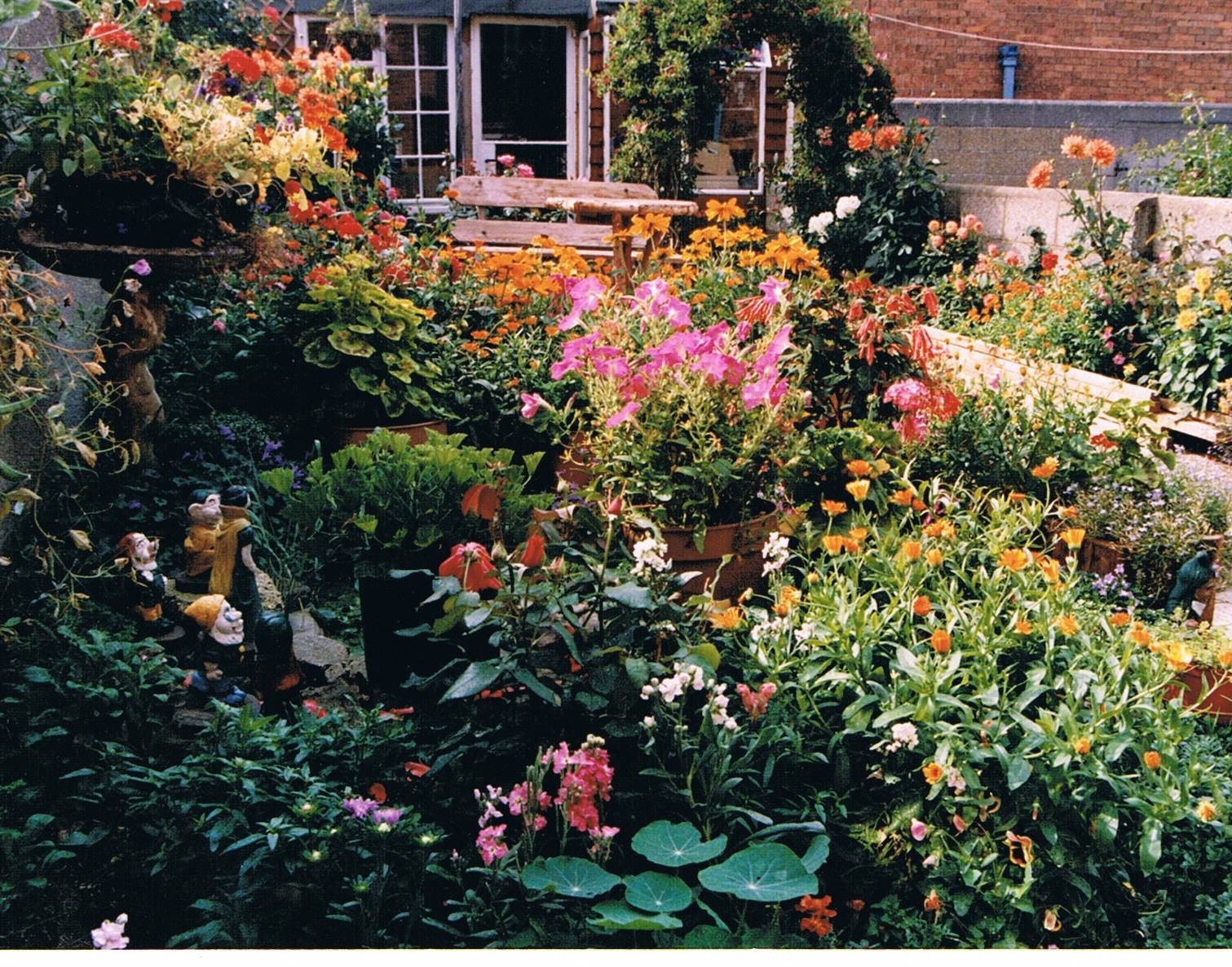
Not content with that layout, George decided to build another house. The obvious site was his yard behind ‘Nell Jeff’s wooden bungalow’ – his redundant storage sheds had become a village eyesore and looked worse through the improved Avon Glen. He obtained conditional planning permission and had built what proved to be their last retirement bungalow, Green Pastures (8), a red-brick bungalow, later renamed ‘Craig-y-Don Paddocks’.
Years before, this site was “the yard” adjoining Avon Glen, its various wooden and tin storage sheds used throughout the year for the market gardening and fruit harvesting business as depicted in the Murals at the Woodgreen Village Hall. At the front, adjoining the High Street, was the wooden bungalow originally used by Bethiah Brewer as a tea-room for visitors viewing the village blossoms in Spring, and later in the year, also to sell home-baked foodstuffs to those picnicking on Castle Hill -that same bungalow later occupied by ‘Nell Jeff’.
With ‘Nell Jeff’s’ health failing and the wooden bungalow deteriorating, George eventually secured conditional planning permission for a brick bungalow to be constructed at the rear of the plot.
Green Pastures (8) was built and occupied by him and Grace. The Planning Permission required the wooden bungalow to be demolished once his ageing relative had moved out – in fact ‘Nell Jeff’ continued to live there for several years and it was only after she moved to a nursing home offering 24-hour care, that the Planning Condition was achieved.
‘Green Pastures’was George’s last home. He passed away in 1966 aged 78 years and was laid to rest in Woodgreen Cemetery, soon to be ‘accompanied’ in the adjoining grave by George Young, his brother-in-law. “Dear Aunt Nell Jeff” died in 1977, aged 92, and her grave is close by. Grace continued to occupy ‘Green Pastures’ for several years until her health deteriorated, when she sold the bungalow and moved to her stepdaughter’s home in Salisbury. Eventually, she required twenty-four-hour care and had to be transferred to a nursing home where she died in December 1997, aged 93 years. Her ashes were interred in the grave of her mother, Emily Harriett Curtis, at Woodgreen Cemetery.
Properties occupied by George Brewer’s married children
Avona, (4) became the first home of Mrs Ellen ‘Nel’ (nee Brewer) Simpson & family.
Merry Orchard (10), on Steels Drove off the High Street was the home of Douglas Brewer & family until 1964. It was a two-bedroomed, red-bricked bungalow. This was demolished in 2007 and rebuilt as a chalet property.
Maurice Brewer and family returned from overseas and lived in The Olde Shop, (11). The adjoining flat-roofed grocery shop to the front was run by his wife, Joan. Later on, it became an antique furniture outlet run by Maurice. The house has since been extended and renamed ‘The Old Cottage’ and the shop demolished.
Woodbine Cottage (12) (now renamed Castle Dene) was the second home of Ellen ‘Nel’ Simpson & family.
Other properties owned at various times by George Brewer
Orchard End (13) was originally two properties. George Brewer sold it to Miss Dorothea Jane Stephen on 20 January 1938. On her death in 1947, it was bequeathed to ‘The Church Missionary Trust Association’ and subsequently tenanted. It was occupied by Mrs Alice Philpot at the time of the BBC programme, ‘The Village on the Wall’.
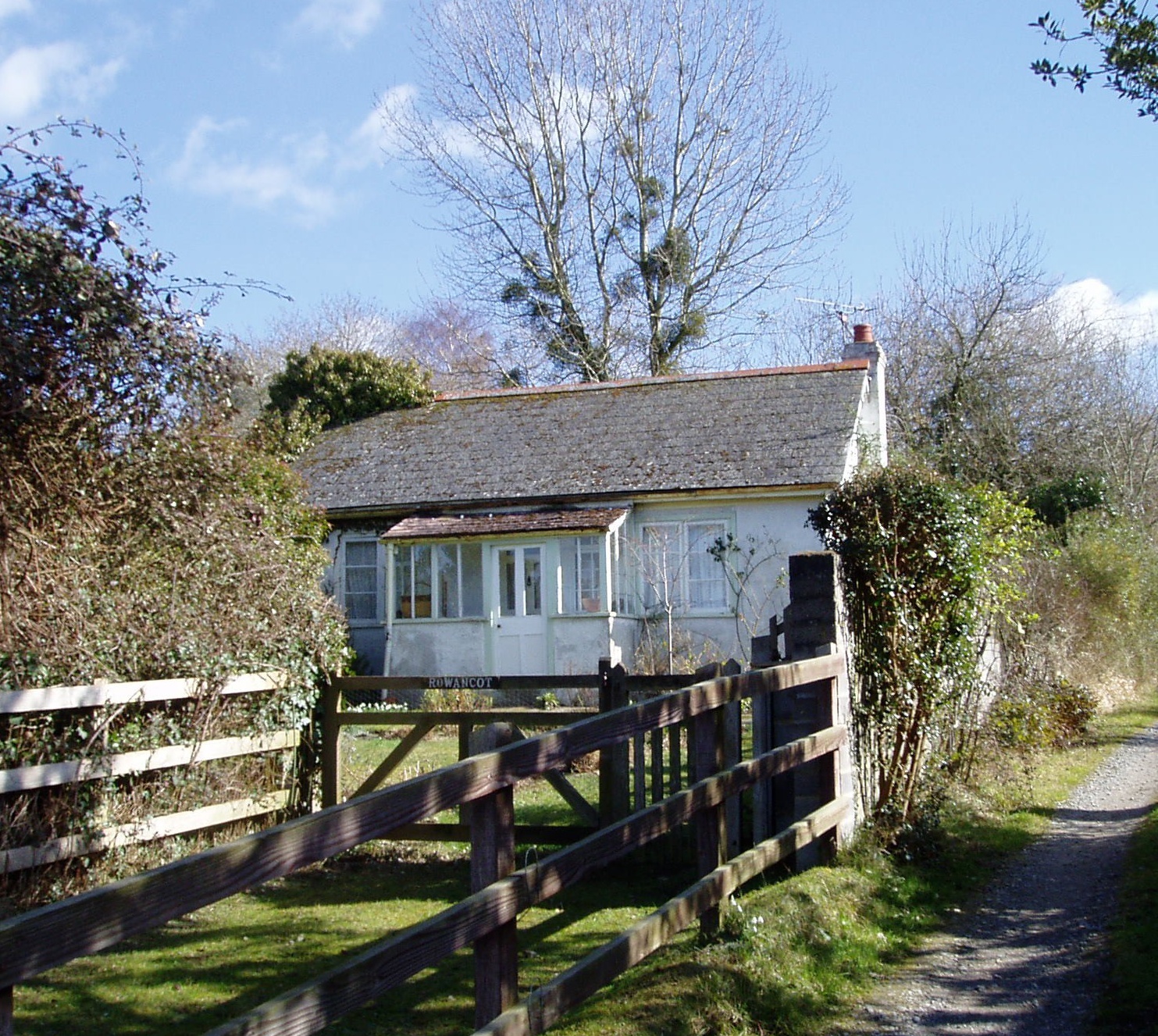
Whilst owned by George Brewer, part of the garden of Rosemary Cottage (14) was divided off and combined with a strip of land purchased from ‘Orchard End’ on 24 March 1947 from Miss Stephen. A prefabricated bungalow, Rowancot (15), was built on this plot next to the Methodist Chapel. This was occupied by George & Ellen (nee Webb) Young, the married sister of Grace Brewer. In 2025, the vacant, semi-derelict, property was sold for redevelopment.
Opposite the former Methodist Chapel are two semi-detached houses George had built on his market gardening land with a view to these being tenanted by workers at Hale Nurseries.
- Burnlea Cottage (16) and The Willows (17)
- Avondene (18) and Avondale (19)
George Brewer’s market gardening land – house plots sold to relatives
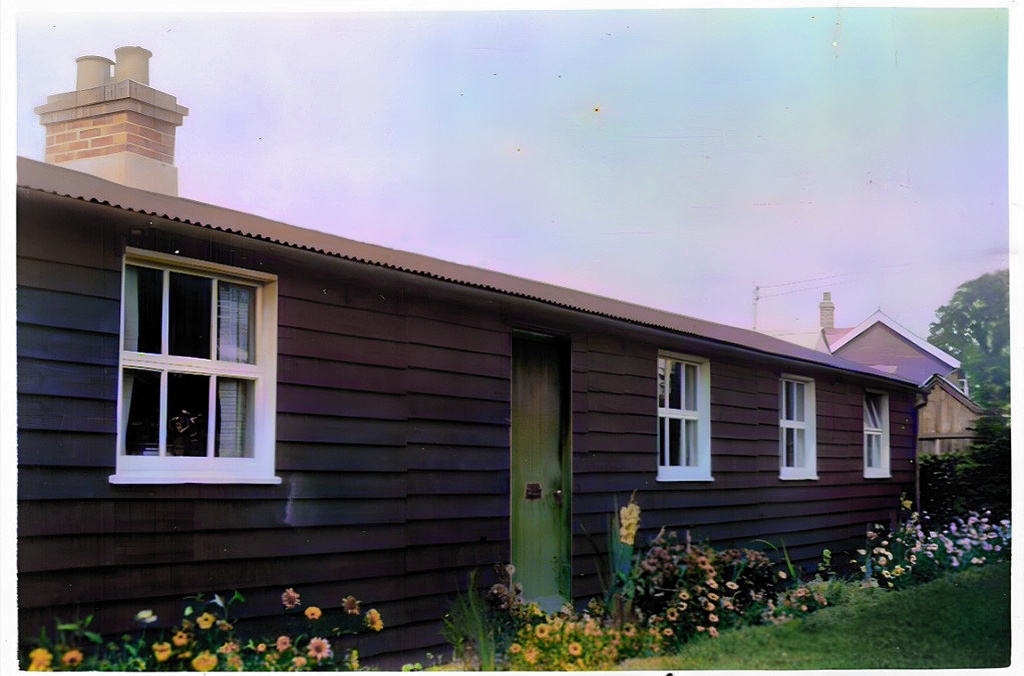
Homestead (20) was a long wooden bungalow that had been a WW1 army hut at Broad Chalke, Wiltshire. Once re-sited, it became the home of Walter Crook and his second wife, Lily (nee Ings, sister of Bessie Brewer) and their growing family. They had outgrown their tiny home at Pink Cottage (9) (enlarged years later and now called Cob Cottage).
Walter’s first wife, Rose (nee Parker) had died in 1913 aged 33, leaving 3 young children. Five years later Walter, aged 40, married Lily, aged 27, and they had a further 5 children: Kathleen, Ronald, Irene, Donald and Vera. The children are depicted attending the Methodist Chapel’s Sunday School on the Woodgreen Village Murals. Walter died in 1936, aged 58; Lilian in 1977, aged 86; they share the same grave at Woodgreen Cemetery.
Avonside (21) is a brick-built bungalow adjoining Homestead. This was occupied by Maurice Brewer and family after they moved from The Olde Shop. Maurice & family subsequently moved to Romilly (22) where a brick-built bungalow had been constructed to replace another smaller but dilapidated wooden bungalow. Later, the house was purchased by Professor Robert Baker, one of the two artists who had painted the murals at the Village Hall in 1932, and who had retired to the village with his wife.
Meet the family
In 1957, George Brewer celebrated his 70th Birthday by organising a ‘Mystery Coach Outing’ for his family and close friends. The photograph has been numbered with names in the following table to show the family connections.
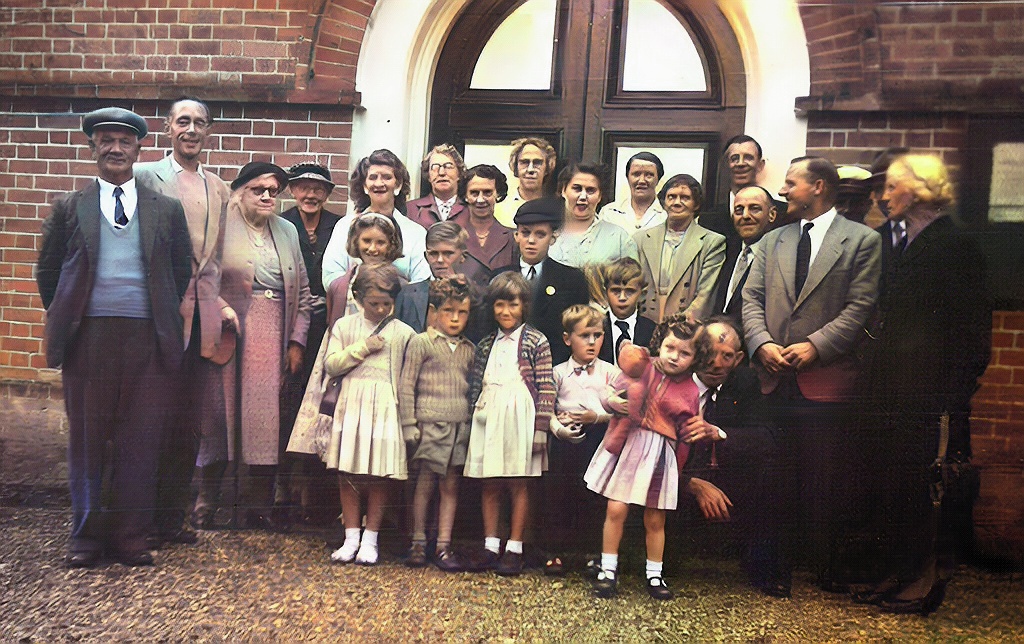
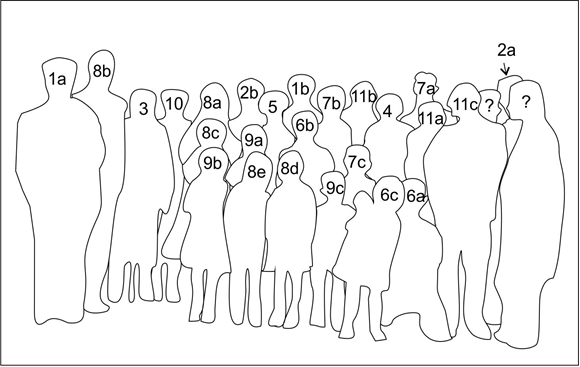
| 1 | (a) George Brewer & wife: (b) Grace (nee Webb) Brewer |
| 2 | (a) George Young & wife: (b) Ellen (nee Webb) Young |
| 3 | Miss ‘Nell’ Jefferis , George Brewer’s distant cousin |
| 4 | Mrs Lillian (nee Ings) Crook, George Brewer’s widowed sister-in-law, via his first marriage to Mabel ‘Bessie’ Ings |
| 5 | Mrs Greeba (nee Clark) Brewer wife of Alfred, George Brewer’s eldest son |
| 6 | (a) Douglas Brewer, George Brewer’s surviving twin son who married Ellen ‘Nell’ (nee Mist) Brewer), with their children: (b) John Brewer (c) Margaret Brewer |
| 7 | (a) Maurice Brewer (George Brewer’s youngest son) with wife: (b) Joan (nee White) Brewer, and their son: (c) Pelham. |
| 8 | (a) Helen ‘Nell’ (nee Brewer) Simpson, (G.B’s ‘baby’ daughter) with husband: (b) Colin ‘Johnnie’ Simpson, and their children: (c) Dianne Simpson (d) Marilyn Simpson (e) Andrew Simpson |
| 9 | Grandchildren of Mrs Lillian Crook (4) (daughter, Irene, married Duncan ‘Paddy’ Anton) (a) Norman Anton (b) Jean Anton (c) Michael Anton Note: The Anton children and their distant cousins named above, attended the Woodgreen Methodist Sunday School where George Brewer was the Minister, and reserve organist. |
| 10 | Mrs ‘Maggie’ Crook, (Lillian’s sister-in-law, and widow of Frank Crook) – the Methodist Chapel organist. |
| 11 | (a) ‘Gussie’ Harrington, the village coal merchant and haulier, his wife: (b) Elsie, (close friends of George Brewer), with their son-in-law: (c) Alan Biddlecombe, who had married Hilda. |
Compiled by John H. Brewer, son of Douglas, and grandson of George Brewer.
September 2025.
Note: Historic b&w photographs have been coloured using https://imagecolorizer.com/.